Nestled in northeastern France along the Rhine, the Alsace region feels like a place where borders blur—not just geographically, but in every bite you take. I’ve wandered its half-timbered villages like Colmar and Strasbourg more times than I can count, and each trip reminds me how Alsatian food tells a story of resilience and fusion. It’s hearty, comforting, and unpretentious, blending French elegance with German robustness in ways that make you feel instantly at home. Think crisp tarte flambée fresh from a wood-fired oven or a steaming plate of choucroute on a chilly evening—these aren’t just meals; they’re slices of history on a plate.
The magic comes from Alsace’s turbulent past. For centuries, the region bounced between French and German control, from the Treaty of Westphalia in 1648 that handed it to France, to the Franco-Prussian War in 1871 when it flipped back to Germany, and then again after the World Wars. This back-and-forth left a culinary imprint that’s neither fully one nor the other. Pork reigns supreme, sauerkraut gets star billing, yet delicate white wines and creamy sauces add that unmistakable French touch. It’s a cuisine born of practicality—farmers using what the land gave—and it’s evolved into something uniquely Alsatian.
The Historical Roots of Alsatian Flavors
Alsace’s food reflects its identity as a cultural crossroads. Germanic influences dominate in hearty meats and fermented cabbage, while French finesse shows in wine pairings and refined preparations.
Generations of families have passed down recipes that honor both sides. In my experience, sitting in a cozy winstubb (traditional Alsatian tavern) feels like stepping into that shared history—wood-paneled walls, checkered tablecloths, and dishes that warm you from the inside out.
Signature Dishes That Define Alsatian Cuisine
No exploration of Alsatian food skips the classics. These dishes capture the region’s soul: rustic, generous, and full of flavor.
Choucroute Garnie: The Quintessential Alsatian Feast
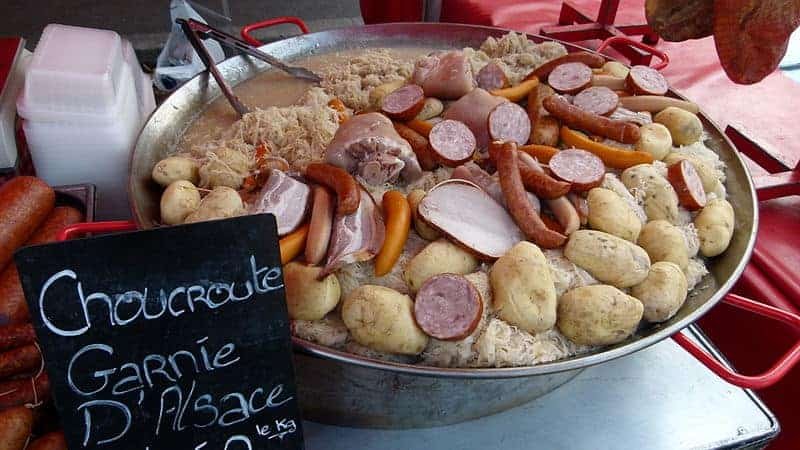
Choucroute garnie is Alsace’s crown jewel—a mound of tangy sauerkraut slow-cooked with juniper berries, white wine, and a parade of pork products like sausages, bacon, and knuckle.
It’s a dish for sharing, often served family-style on large platters. The sauerkraut absorbs all those rich flavors, turning simple ingredients into something extraordinary. Pair it with boiled potatoes and a chilled Riesling for balance.
Pros of choucroute garnie:
- Incredibly satisfying and warming on cold days
- Uses affordable, traditional ingredients
- Great for groups
Cons:
- Heavy and pork-heavy (not ideal for lighter appetites)
- Can be overwhelming if you’re new to fermented foods
Tarte Flambée (Flammekueche): The Alsatian “Pizza”
Often called Alsatian pizza, tarte flambée is thin, crispy dough topped with crème fraîche, onions, and lardons, baked quickly in a blazing oven.
It’s lighter than you expect—almost delicate—and perfect as a starter or snack. Variations include cheese or even sweet versions with apples. I once devoured one standing at a market stall in Strasbourg, and it ruined regular pizza for me forever.
Baeckeoffe: The Baker’s Oven Stew
Baeckeoffe means “baker’s oven.” Traditionally, housewives marinated meats (beef, pork, lamb) with potatoes, onions, and white wine, then took the earthenware pot to the village baker to cook in the residual heat after bread baking.
The long, slow simmer creates tender meat and infused flavors. It’s a Sunday dish, hearty and aromatic with herbs like thyme.
Coq au Riesling: A Lighter Twist on Coq au Vin
This chicken stew swaps Burgundy red for Alsatian Riesling, adding cream, mushrooms, and lardons for a silky sauce.
It’s elegant yet comforting—proof Alsace can do finesse amid the heartiness. Serve over spätzle for the full effect.
Kougelhopf: The Festive Sweet Bread
This brioche-like cake, baked in a distinctive fluted mold, often includes raisins and almonds. Sweet versions shine at breakfast; savory ones feature bacon.
It’s a holiday staple, especially Christmas. The shape and golden crust make it instantly recognizable.
Wines and Pairings: The Unsung Heroes
Alsace stands out in France for its varietal wines—mostly dry whites like Riesling, Gewürztraminer, Pinot Gris, and Sylvaner.
These crisp, aromatic wines cut through rich dishes beautifully. Riesling’s acidity handles choucroute’s tang; Gewürztraminer’s spice complements Munster cheese.
A quick comparison table of key Alsatian wines:
| Wine | Key Characteristics | Best Paired With | Style Notes |
|---|---|---|---|
| Riesling | High acidity, citrus, mineral | Choucroute, fish sauerkraut | Dry, elegant |
| Gewürztraminer | Lychee, rose, spicy | Munster cheese, spicy foods | Aromatic, fuller body |
| Pinot Gris | Pear, honey, round | Baeckeoffe, poultry | Off-dry to rich |
| Sylvaner | Green apple, light | Tarte flambée, salads | Crisp, easy-drinking |
Cheeses and Sides That Complete the Meal
Munster cheese—soft, washed-rind, pungent—is a must. It’s often melted or served with cumin.
Spaetzle (egg noodles) and bretzel (pretzels) appear everywhere. Bretzels are soft, salty, and addictive—grab one fresh from a bakery.
Where to Experience Authentic Alsatian Cuisine
Strasbourg and Colmar offer unbeatable spots.
In Strasbourg, try winstubs like Au Pont Corbeau or Caveau Gurtlerhoft near the cathedral—cozy, authentic, and full of locals.
In Colmar, Wistub Brenner in Little Venice serves classic choucroute with canal views. For something refined, L’Atelier du Peintre offers elevated takes.
Many villages along the Alsace Wine Route have family-run spots where the food feels personal.
People Also Ask
What is Alsatian cuisine known for?
It’s famous for hearty, pork-centric dishes influenced by German traditions, like choucroute garnie and tarte flambée, paired with crisp white wines.
Is Alsatian food more French or German?
It’s a blend—Germanic in ingredients (pork, sauerkraut) but French in preparation and wine focus.
What is the most famous dish in Alsace?
Choucroute garnie often tops the list, followed closely by tarte flambée.
What wines pair best with Alsatian food?
Dry Riesling or Gewürztraminer— their acidity balances the richness.
Is Alsatian cuisine vegetarian-friendly?
Traditionally meat-heavy, but tarte flambée variations, spaetzle, and cheese dishes offer options.
FAQ
What makes Alsatian cuisine unique?
Its fusion of French and German elements creates bold yet refined flavors, emphasizing local wines and seasonal ingredients.
Can I make tarte flambée at home?
Yes—use thin dough, crème fraîche, onions, and bacon. Bake hot (500°F if possible) for crispiness.
Where can I buy authentic Alsatian ingredients outside France?
Specialty stores or online for sauerkraut, Munster, and wines. Check for AOC-labeled products.
Is Alsace good for food tours?
Absolutely—the Wine Route combines tastings with winstubb meals.
What’s a good starter for someone new to Alsatian food?
Start with tarte flambée—it’s approachable, shareable, and delicious.
Alsatian cuisine isn’t flashy—it’s honest, warming, and tied to the land and its people. Next time you’re in France, head east. One plate of choucroute or a slice of flammekueche, and you’ll understand why this corner of the country captures hearts (and stomachs) so completely.