Imagine stumbling into a sun-drenched taverna on the Greek islands during a backpacking trip in my twenties. The air buzzed with laughter, clinking glasses, and the scent of fresh herbs mingling with grilled seafood. That first bite of tzatziki—cool, garlicky, and bursting with cucumber—hooked me for life. Mediterranean cuisine isn’t just food; it’s a vibrant tapestry of flavors from coastal regions where meals bring people together. From the olive groves of Italy to the spice markets of Morocco, these recipes celebrate simplicity, freshness, and heart-healthy ingredients that make every dish feel like a warm embrace.
What is Mediterranean Cuisine?
Mediterranean cuisine draws from the diverse cultures bordering the Mediterranean Sea, blending fresh produce, lean proteins, and healthy fats like olive oil. It’s not a rigid diet but a lifestyle emphasizing seasonal vegetables, whole grains, and herbs over processed foods. Think of it as nature’s bounty on a plate, where meals are shared and savored slowly.
This approach fosters balance, with dishes varying by region—zesty Greek salads, hearty Spanish paellas, or aromatic Lebanese mezes. At its core, it’s about quality ingredients prepared simply to highlight their natural tastes. No wonder it feels so approachable yet exotic.
The Health Benefits of the Mediterranean Diet
Following a Mediterranean-style eating pattern can lower heart disease risk by improving cholesterol levels and reducing inflammation, thanks to its focus on omega-3-rich fish and antioxidant-packed veggies. Studies show it supports better blood sugar control, aiding in diabetes prevention or management. Plus, it promotes longevity, with folks in Mediterranean countries often living healthier, longer lives.
The diet’s emphasis on nuts, fruits, and olive oil helps maintain a healthy weight without feeling deprived. It even boosts brain health, potentially warding off cognitive decline. Laughter aside, who knew olive oil could be your secret weapon against the blues?
Exploring Mediterranean Regions Through Food
Diving into Mediterranean recipes is like a culinary passport stamp from Greece’s feta-laced pies to Italy’s tomato-kissed pastas. Each region adds its twist, influenced by climate and history—think North African spices meeting European elegance. It’s a fun way to travel from your kitchen.
Start with lighter Levantine appetizers before venturing to robust Spanish mains. The variety keeps things exciting, and you’ll discover how similar ingredients morph into unique delights. Ready to embark?
Appetizers and Mezes: Small Bites with Big Flavors
These starters set the tone for any Mediterranean feast, perfect for sharing or solo snacking. They’re light yet satisfying, often veggie-forward with dips that scream freshness. Pair them with warm pita for that authentic touch.
Hummus (Lebanese Origin)
Creamy hummus is a staple meze, blending chickpeas into a smooth dip that’s nutty from tahini and zingy with lemon. It’s versatile—spread on bread or scoop with veggies. My aunt once served it at a family gathering, and it vanished in minutes.
- 1 can chickpeas, drained
- 1/4 cup tahini
- 2 garlic cloves
- Juice of 1 lemon
- 2 tbsp olive oil
- Salt and cumin to taste
- Blend chickpeas, tahini, garlic, lemon juice, and salt in a food processor.
- Drizzle in olive oil while blending until smooth.
- Garnish with paprika and more oil; serve chilled.
Tzatziki (Greek)
This yogurt-based dip cools the palate with grated cucumber and dill, ideal for dipping or topping grilled meats. I remember slathering it on gyros during a beach picnic—it turned a simple meal magical. It’s refreshingly light.
- 1 cucumber, grated and drained
- 2 cups Greek yogurt
- 2 garlic cloves, minced
- 1 tbsp dill, chopped
- 1 tbsp olive oil
- Lemon juice and salt
- Mix yogurt, garlic, dill, oil, and lemon in a bowl.
- Fold in drained cucumber.
- Chill for an hour to meld flavors.
Baba Ganoush (Levantine)
Smoky eggplant dip with tahini and garlic, it’s like hummus’s earthier cousin. Roasting the eggplant over flame gives that authentic char. Once, I burned my first batch—lesson learned: patience pays off.
- 2 eggplants
- 1/4 cup tahini
- 2 garlic cloves
- Lemon juice
- Olive oil
- Parsley
- Roast eggplants until charred; scoop flesh.
- Blend with tahini, garlic, lemon, and salt.
- Top with oil and parsley.
Salads: Fresh and Vibrant Starters
Mediterranean salads burst with color and crunch, using ripe produce dressed simply. They’re meals in themselves or sides that brighten any table. No heavy dressings here—just pure, zesty goodness.
Greek Salad (Horiatiki, Greek)
Chunky tomatoes, cucumbers, onions, olives, and feta tossed in olive oil—simple yet iconic. On a hot summer day, it’s my go-to refresher. The key? Use the juiciest tomatoes you can find.
- 4 tomatoes, wedged
- 1 cucumber, sliced
- 1 red onion, sliced
- Kalamata olives
- Feta block
- Olive oil and oregano
- Combine veggies and olives in a bowl.
- Top with feta; drizzle oil and sprinkle oregano.
- Toss gently before serving.
Tabbouleh (Lebanese)
Herb-packed bulgur salad with parsley, mint, tomatoes, and lemon. It’s light and tangy, perfect for picnics. I once overdid the parsley—now I balance it for that fresh kick.
- 1/2 cup bulgur, cooked
- 2 bunches parsley, chopped
- Mint leaves, chopped
- 2 tomatoes, diced
- Lemon juice
- Olive oil
- Mix cooked bulgur with herbs and tomatoes.
- Dress with lemon and oil; season.
- Let sit to absorb flavors.
Fattoush (Lebanese)
Crispy pita bits mixed with greens, radishes, and sumac dressing. The crunch is addictive. Picture a salad that’s fun to eat—my kids even love it.
- Lettuce, chopped
- Cucumbers, tomatoes
- Radishes
- Fried pita pieces
- Sumac, lemon, oil
- Toss veggies and pita.
- Whisk sumac, lemon, oil for dressing.
- Drizzle and mix.
Soups and Stews: Comfort in a Bowl
These hearty yet light dishes warm the soul, packed with veggies and legumes. They’re one-pot wonders, ideal for meal prep. The slow simmer builds deep flavors.
Greek Lentil Soup (Fakes)
Earthy lentils simmered with veggies and tomato, finished with vinegar. It’s nourishing and budget-friendly. Winters at home always include a big pot—comfort food at its best.
- 1 cup lentils
- Onion, carrot, celery
- Tomato paste
- Olive oil
- Vinegar
- Bay leaf
- Sauté veggies in oil.
- Add lentils, water, paste, bay; simmer 40 min.
- Stir in vinegar; serve.
Mediterranean Lentil Soup
Similar to fakes but with extra spices like cumin. It’s versatile—add spinach for greens. I tweak it weekly for variety.
- Lentils, onion, garlic
- Carrots, tomatoes
- Cumin, turmeric
- Olive oil
- Lemon
- Sauté aromatics.
- Add lentils, veggies, spices, broth; cook.
- Finish with lemon.
Gazpacho (Spanish)
Chilled tomato soup blended with veggies—refreshing on hot days. No cooking needed. My Spanish friend shared her grandma’s version; it’s a summer staple now.
- Tomatoes, cucumber
- Bell pepper, onion
- Garlic, bread
- Olive oil
- Vinegar
- Blend all ingredients.
- Chill for hours.
- Garnish with herbs.
Main Courses: Hearty and Satisfying
Mains showcase proteins like fish or lamb, paired with veggies. They’re balanced, flavorful, and often oven-friendly. Great for family dinners.
Moussaka (Greek)
Layered eggplant, ground meat, and béchamel—baked to bubbly perfection. It’s like lasagna’s richer sibling. Baking one for friends always sparks stories.
- Eggplants, sliced
- Ground beef or lamb
- Tomatoes, onion
- Béchamel sauce
- Cheese
- Fry eggplant; sauté meat with tomatoes.
- Layer in dish; top with béchamel.
- Bake at 350°F for 45 min.
Spanakopita (Greek)
Spinach and feta pie in flaky phyllo. Crispy outside, creamy inside. I made it for a potluck once—gone in a flash.
- Spinach, feta
- Phyllo dough
- Onion, dill
- Eggs
- Butter
- Sauté spinach and onion; mix with feta, eggs.
- Layer phyllo with butter; add filling.
- Bake until golden.
Shakshuka (North African/Israeli)
Eggs poached in spicy tomato sauce with peppers. Breakfast for dinner vibe. The runny yolks mix perfectly—pure comfort.
- Tomatoes, peppers
- Onion, garlic
- Spices: cumin, paprika
- Eggs
- Cilantro
- Sauté veggies and spices; add tomatoes, simmer.
- Crack eggs in; cover until set.
- Sprinkle herbs.
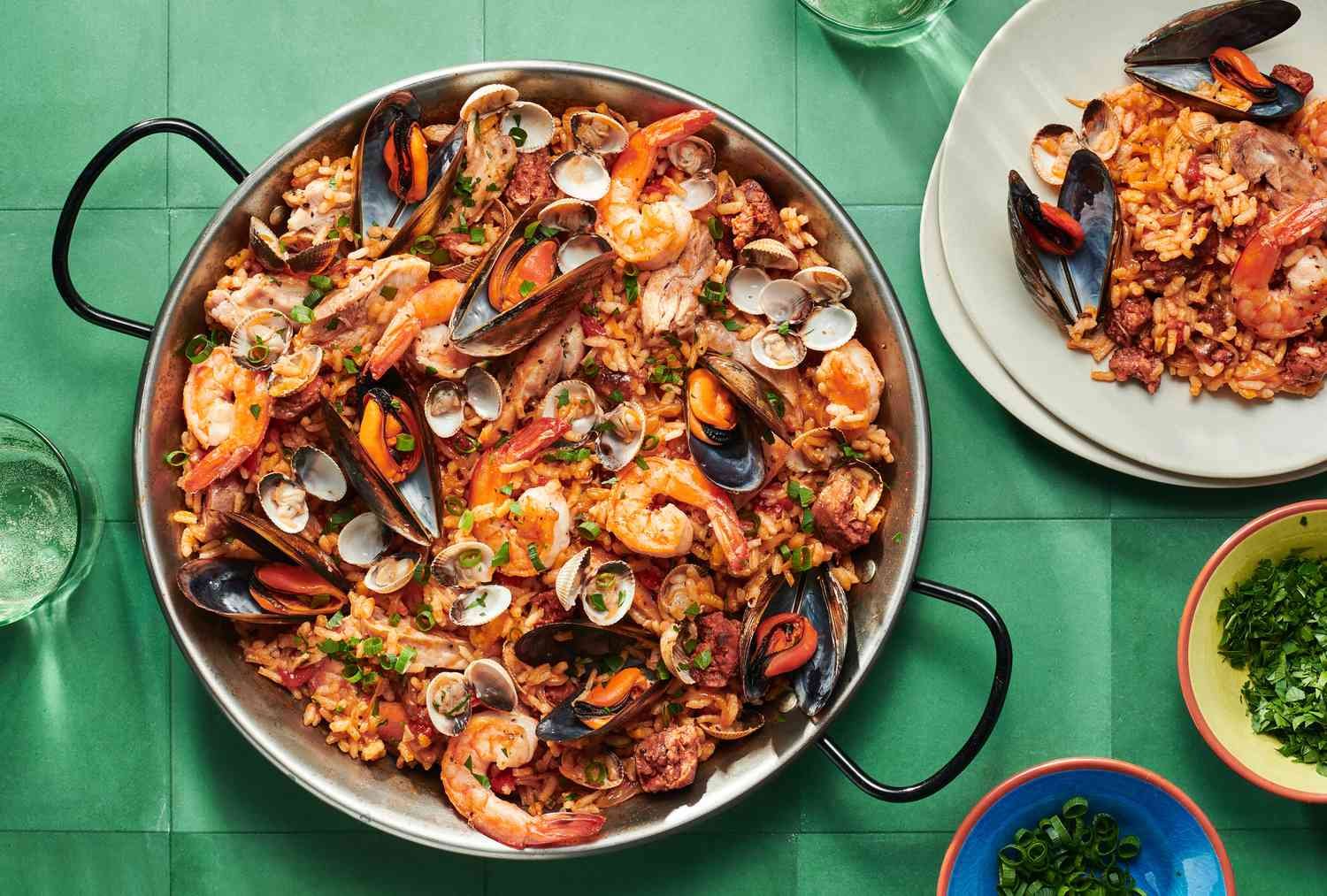
Paella (Spanish)
Saffron rice with seafood and chicken—festive and aromatic. Cooking it outdoors feels like a party. Don’t stir after adding rice!
- Rice, saffron
- Shrimp, mussels, chicken
- Peppers, peas
- Onion, garlic
- Broth
- Sauté proteins and veggies.
- Add rice, saffron, broth; cook uncovered.
- Let rest before serving.
Ratatouille (French Mediterranean)
Stewed veggies like eggplant, zucchini, tomatoes. Simple yet elegant. Movie-inspired, I tried it—now a veggie hero.
- Eggplant, zucchini
- Tomatoes, peppers
- Onion, garlic
- Herbs: thyme, basil
- Olive oil
- Sauté each veggie separately.
- Combine with herbs; simmer.
- Serve warm or cold.
Greek Lemon Roasted Chicken and Potatoes
Juicy chicken with crispy potatoes, lemony and herby. One-pan ease. Family recipe passed down—always a hit.
- Chicken pieces
- Potatoes, wedged
- Lemon, garlic
- Oregano
- Olive oil
- Toss all in lemon-garlic marinade.
- Roast at 400°F for 1 hour.
- Baste midway.
Shrimp Saganaki (Greek)
Shrimp in tomato-feta sauce with ouzo. Quick and impressive. The anise flavor surprises delightfully.
- Shrimp
- Tomatoes, onion
- Feta, ouzo
- Garlic, parsley
- Sauté onion, garlic; add tomatoes.
- Add shrimp, ouzo; top feta.
- Bake until melted.
Vegetarian Mains: Plant-Powered Delights
These showcase legumes and veggies as stars. Filling without meat. Ideal for weeknights.
Gigantes Plaki (Greek)
Giant beans baked in tomato sauce. Hearty and flavorful. Slow-cooking melds everything—worth the wait.
- Large white beans
- Tomatoes, onion
- Garlic, parsley
- Olive oil
- Cook beans; sauté onion, garlic.
- Mix with tomatoes; bake 1 hour.
- Garnish parsley.
Greek Chickpea Stew
Chickpeas in herby tomato broth. Protein-packed. Add bread for dipping—cozy meal.
- Chickpeas
- Tomatoes, onion
- Garlic, herbs
- Olive oil
- Lemon
- Sauté aromatics; add tomatoes, chickpeas.
- Simmer 30 min.
- Finish lemon.
Briami (Greek Ratatouille)
Baked veggies with herbs. Effortless side or main. Layers of flavor build in the oven.
- Potatoes, zucchini
- Eggplant, tomatoes
- Onion, garlic
- Olive oil, herbs
- Slice and layer veggies.
- Drizzle oil, herbs; bake covered.
- Uncover to crisp.
Fasolakia (Greek Green Beans)
Green beans braised in tomato. Tender and saucy. Grandma’s specialty—nostalgic bite.
- Green beans
- Tomatoes, onion
- Garlic, dill
- Olive oil
- Lemon
- Sauté onion; add beans, tomatoes.
- Simmer until soft.
- Add lemon, dill.
Desserts: Sweet Endings
Mediterranean sweets use nuts, honey, and fruit—less sugar, more natural. Indulgent yet balanced.
Baklava (Turkish/Greek)
Layered phyllo with nuts and honey syrup. Crispy, sticky heaven. Cutting diamonds feels artistic.
- Phyllo dough
- Nuts: walnuts, pistachios
- Butter
- Honey syrup
- Layer phyllo with butter and nuts.
- Bake; pour hot syrup.
- Cool before slicing.
Comparison of Mediterranean Diets by Region
| Region | Key Ingredients | Typical Dishes | Health Focus |
|---|---|---|---|
| Greek | Feta, olives, yogurt | Moussaka, salads | Heart-healthy fats |
| Italian | Tomatoes, pasta, basil | Caprese, pesto | Balanced carbs |
| Spanish | Saffron, seafood, rice | Paella, gazpacho | Anti-inflammatory spices |
| Lebanese | Chickpeas, tahini, herbs | Hummus, tabbouleh | Plant-based proteins |
This table highlights how regions adapt similar elements differently.
Pros and Cons of the Mediterranean Diet
Pros:
- Promotes heart health and longevity.
- Encourages social eating and enjoyment.
- Versatile for vegetarians.
- Uses affordable, fresh ingredients.
Cons:
- Requires planning for fresh produce.
- Seafood can be pricey inland.
- Portion control needed for nuts and oil.
- Not ideal for low-carb seekers.
Overall, the pros far outweigh, making it sustainable.
People Also Ask (PAA) Section
What is a typical Mediterranean meal?
A classic might start with hummus and pita, followed by grilled fish with veggies and olive oil, ending with fruit. It’s balanced and flavorful. For ideas, check sites like The Mediterranean Dish.
Are Mediterranean recipes good for weight loss?
Yes, thanks to high fiber and healthy fats that keep you full. Focus on portions—it’s not restrictive. Studies back its effectiveness; see Cleveland Clinic’s guide.
What are some easy Mediterranean recipes for beginners?
Start with Greek salad or tzatziki—minimal cooking. They’re forgiving and delicious. For more, explore Olive Tomato.
How healthy is Mediterranean food?
Extremely, reducing risks of heart disease and diabetes. It’s nutrient-dense. Learn more at Harvard’s site.
Where to Get Authentic Mediterranean Ingredients
Stock up at local markets or online via Amazon’s Mediterranean section. Ethnic stores offer fresh feta and olives. For tools, a good olive oil pourer helps.
Best Tools for Mediterranean Cooking
Invest in a food processor for dips (like this one). Clay tagine pots enhance stews. Quality knives make prep breezy.
FAQ
Is the Mediterranean diet suitable for vegetarians?
Absolutely—focus on legumes, veggies, and dairy. Recipes like gigantes plaki shine.
Can I adapt these recipes for gluten-free?
Yes, swap bulgur for quinoa in tabbouleh or use GF phyllo for spanakopita.
What’s the best olive oil for Mediterranean cooking?
Extra virgin from Greece or Italy—cold-pressed for flavor. Store in dark bottles.
How does Mediterranean cuisine differ from Middle Eastern?
They overlap, but Mediterranean leans European with more seafood; Middle Eastern emphasizes spices like sumac.
Are these recipes kid-friendly?
Most are—start with milder dips. My kids love falafel wrapped in pita.
In wrapping up, these 21 recipes capture the essence of Mediterranean living—fresh, communal, and joyful. Whether you’re whipping up a quick salad or a showstopper like paella, each bite connects you to ancient traditions. Experiment, share with loved ones, and let the flavors transport you. For more inspiration, link to our internal salad guide or external recipe hub. Bon appétit!